Article: Which matcha should I choose for lattes, and which for baking?
Which matcha should I choose for lattes, and which for baking?
Ceremonial matcha comes from the first harvest and is drunk with water, while culinary matcha comes from later harvests. As the name suggests, it is best used as an ingredient in baked goods or desserts. Here's how to choose good matcha.
Key information:
• Matcha from earlier harvests contains a greater amount of health-promoting substances, such as L-theanine and catechins, than matcha from later harvests.
• The earlier the harvest, the higher the price of matcha.
• For drinking with water, it's best to choose ceremonial matcha.
• For lattes, medium-grade matcha is sufficient.
• Culinary matcha is only suitable for baking, sweets, and dishes with matcha.
What is matcha?
Matcha is powdered leaves of Camellia sinensis. The bushes from which it is made are grown using a shading method, which allows them to produce more chlorophyll, which determines, among other things, the intense green color, amino acids, which affect the sweet, umami taste of the tea, and L-theanine, which has a relaxing effect.
From tencha to matcha
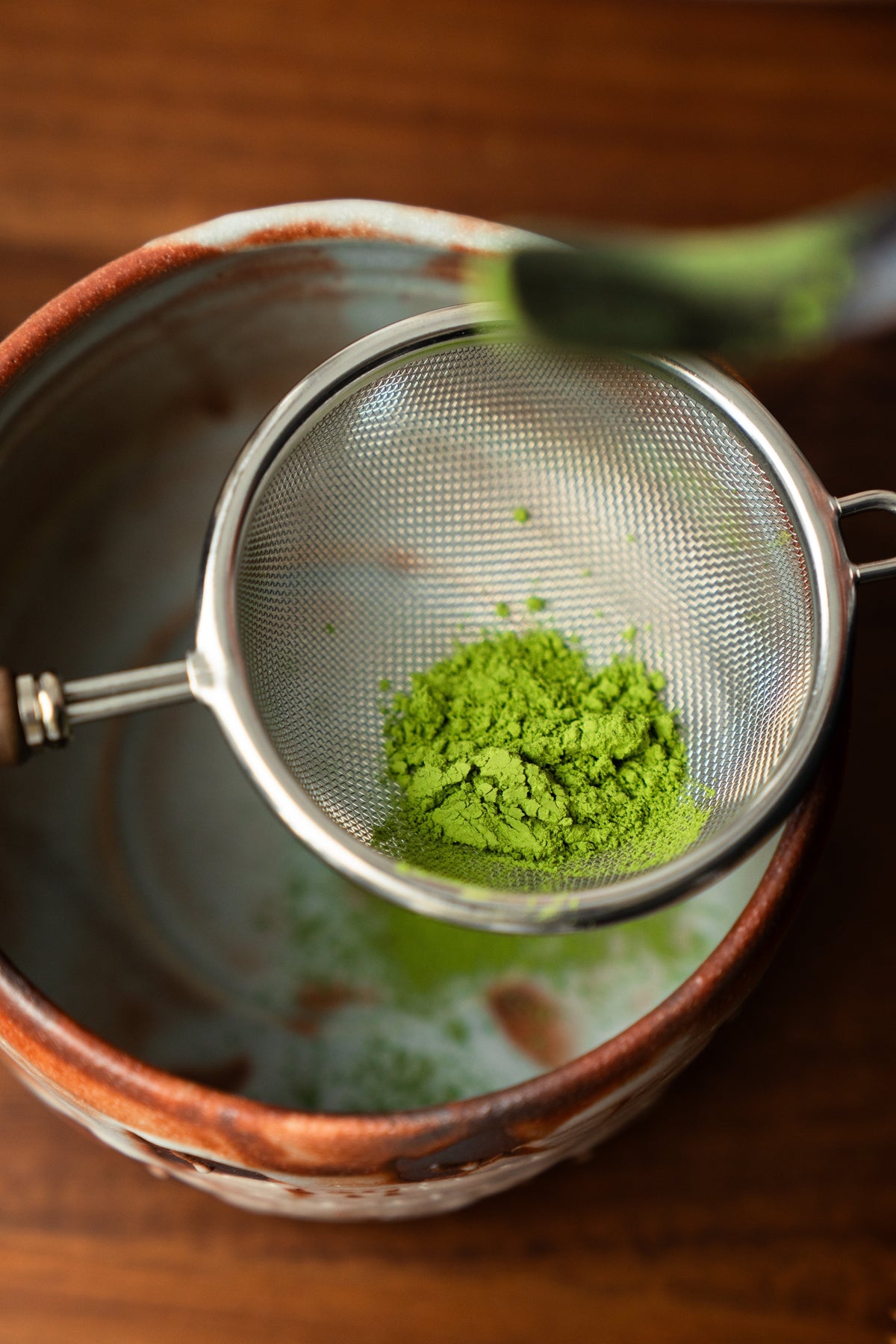
The plants begin to be protected from the sun three weeks before harvesting. Immediately after harvesting, their leaves are steamed and then dried. Stems and veins are removed, and after cleaning, tencha – as it is called before grinding – is ground into powder to become matcha. Tencha tea is available in few stores because it is primarily used for matcha production. Interestingly, its preparation is slightly more difficult than other loose-leaf teas because it floats on the surface of the water.
The effect of matcha
By drinking matcha, we consume whole tea leaves, thus delivering significantly more nutrients to the body than by drinking classic infusions. Matcha also contains a lot of caffeine, as much as 40-135 mg per 200 ml (the exact amount depends on how many grams of powder are used to prepare the drink). However, thanks to the high content of L-theanine (approx. 10-40 mg per 200 ml), the stimulation lasts a long time and does not end with a sudden drop in energy or cause nervousness, which can be experienced after drinking coffee.
Drinking matcha brings many health benefits, but the amount of nutrients it contains varies depending on the quality and grade of the tea we choose.
What are ceremonial grade, premium grade, daily grade, and culinary grade?
The terms ceremonial grade, premium grade, daily grade, and culinary grade, which appear on the packaging of many matcha manufacturers, are not officially certified grades, but simply marketing names. If you want to be sure of the quality of matcha you are buying, do not rely solely on them. Find out where the tea comes from and from which harvest its leaves were taken. If you have the opportunity, be sure to check its color, aroma, and taste.
How to recognize good matcha?
Good matcha has an intense green color. Its taste is delicate, slightly sweet and umami, and its scent is sweetish, fresh, and grassy. A powder with a paler color and a noticeable bitterness will only be suitable for consumption if it is one of the ingredients in a dish or drink. It is also worth paying attention to other aspects – including how the tea is packaged and whether it has an organic certification.
By buying matcha from Japan, especially from Kyoto and Kagoshima prefectures, we have a greater chance of choosing a good quality product. Frequent rainfall, well-sunlit hills, and fogs that form between them, protecting delicate tea leaves from frost, mean that these areas have ideal conditions for growing this green tea. It is from there that we source Moya matcha, which is hermetically sealed immediately after grinding and shipped to Europe in small batches.
How does first-harvest matcha differ from later-harvest matcha?
First-harvest matcha differs from later-harvest matcha in the amount of nutrients, color, and taste, and consequently, in its application and price. The leaves from which it is made are harvested in spring and contain the most relaxing L-theanine and antioxidants, which translates into matcha's health-promoting properties. Each subsequent harvest has a smaller amount of these substances, but which matcha will be the best choice for us actually depends on how we want to consume it. For drinking with water, it is best to choose higher-end matcha; for lattes and other drinks, second-harvest matcha is sufficient; and for cooking, later-harvest culinary matcha will work best.
Types of Moya matcha
At Moya, you will find four types of matcha: Moya Luxury Matcha, Moya Traditional Matcha, Moya Daily Matcha, and Moya Culinary Matcha. Although the first one contains three times more L-theanine than the second, Moya Traditional Matcha will be the best choice for many people because it tastes good both with water and with additions, and its price is slightly lower than that of Luxury Matcha. It is also the most frequently chosen matcha by people who are just starting their adventure with this tea due to its versatility and balanced taste with a pleasant bitterness.
Compare Moya matcha types
| Type | Moya Luxury Matcha | Moya Traditional Matcha | Moya Daily Matcha | Moya Culinary Matcha |
| Harvest | 1st | 1st and 2nd | 2nd and 3rd | 3rd |
| Use | Tea ceremony, for drinking with water | Tea ceremony, for drinking with water, for matcha lattes and other matcha drinks | For matcha lattes and other matcha drinks, baked goods, desserts | For baked goods, desserts, and confectionery |
| Taste | Slightly sweet with a mild umami aftertaste | Balanced, with a slight hint of bitterness | Grassy with distinct bitterness | Distinctly grassy with intense bitterness |
| Color | Intense green | Green | Light green | Olive |
| Price per gram | Approx. PLN 2.50-3.00 | Approx. PLN 2.00 | Approx. PLN 1.00-1.50 | Approx. PLN 0.50 |
Matcha in many ways
Matcha is traditionally drunk with water, and the most popular preparation methods are usucha and koicha, meaning "thin tea" and "thick tea." Nowadays, matcha is also served with plant-based drinks, milk, tonic, or juices, and with additions like fruit pulp.
Usucha
Usucha has a mild taste and is the one typically consumed daily. To prepare perfect usucha, measure 2g of matcha for approximately 60-70ml of water at a temperature no higher than 80°C (the cooler the water, the more delicate the tea's flavor). Then, using a chasen, or bamboo matcha whisk, make energetic N or Z shaped movements until the surface of the tea is covered with a smooth foam. Once the matcha is ready, you can add more water to your liking. Usucha can also serve as a base for drinks such as matcha latte.
Koicha
Koicha is much more intense and umami in flavor than usucha, and its consistency resembles syrup. This type of tea is served during traditional tea ceremonies. Significantly more powder is used for its preparation – the appropriate proportions are about 4g of matcha per 30-40ml of water at 80°C. When preparing koicha, use slower movements with the chasen than when preparing usucha. This tea should not foam, but rather resemble melted chocolate.
How to prepare matcha latte?
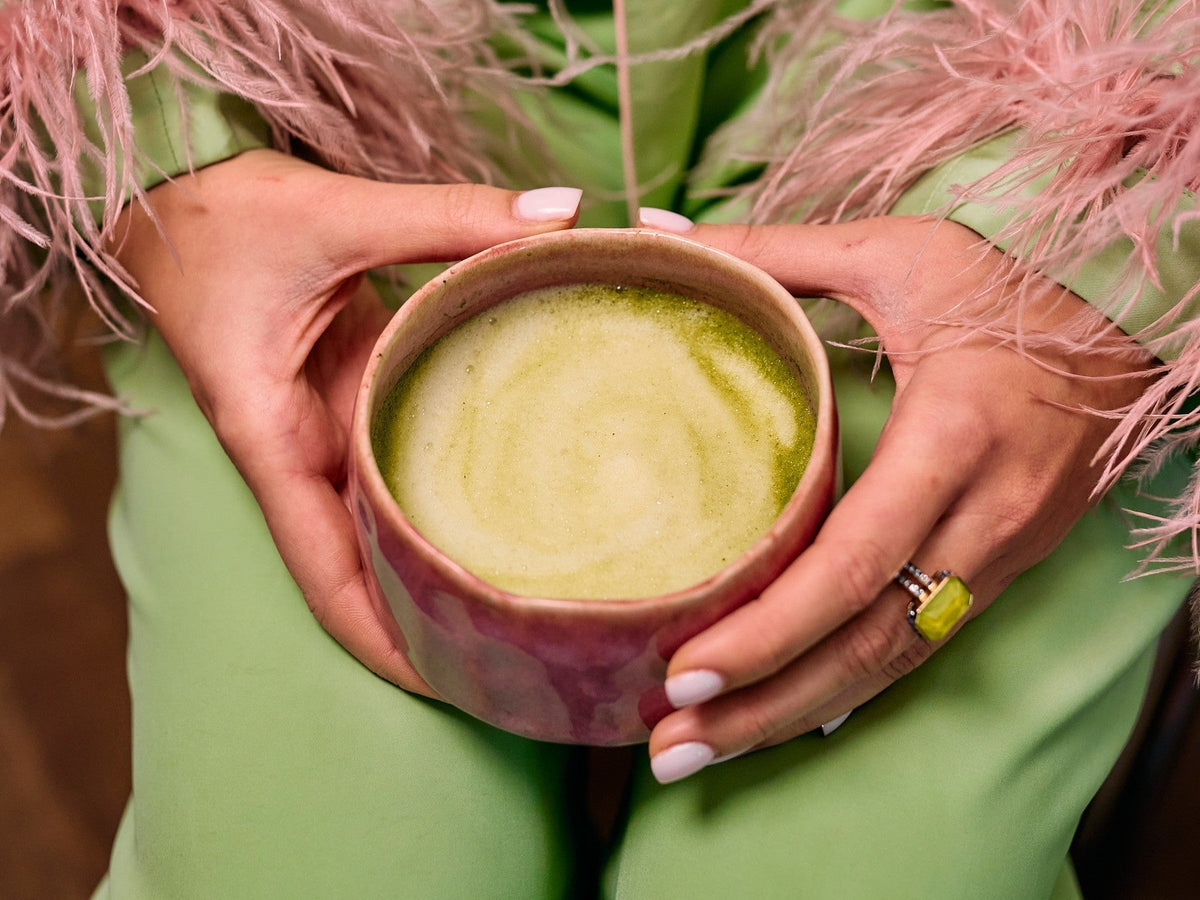
To prepare a matcha latte, measure 3g of matcha and mix it with 50ml of water using a bamboo whisk, frother, or shaker. Then, add 150ml of plant-based drink or milk. It's worth noting that casein, the main protein in cow's milk, can react with the catechins in matcha and thus weaken its effects. Therefore, this tea is recommended to be drunk with plant-based drinks, such as oat, coconut, pea, almond, or rice milk.
Which matcha to choose for matcha latte?
For preparing matcha latte, second-harvest matcha is the optimal choice. Milk and plant-based drinks not only lighten the color but also mask the tea's flavor, so the distinct bitterness of a medium-grade matcha will help preserve it. Moreover, such tea is significantly cheaper. More expensive first-harvest matcha is worth reserving for drinking with water to fully enjoy its taste and properties.
Check how many grams of matcha you need per cup
| Usucha | Koicha | Matcha latte | |
| Amount of matcha | Approx. 2 g | Approx. 4 g | Approx. 3 g |
| Amount of water | 60-70 ml | 30-40 ml | 50 ml + approx. 150 ml milk or plant-based drink |
Matcha in the kitchen
Matcha can be consumed not only as a drink. This tea is also a great addition to dishes. Added in the right amount, it guarantees an intense green color and a grassy, sweet, umami aftertaste and aroma. What's more, it can be used not only in confectionery but also as an addition to savory dishes and sauces, such as matcha mayo.

Savory dishes with matcha
Matcha pairs perfectly with fish and rice (after all, it's an ingredient in Matcha Iri Genmaicha tea!). It can be added to tempura, pasta dough, gnocchi, hummus, pesto, or butter. It will enhance a bowl with vegetables and tofu, and even soup and oatmeal. And mixed with salt (or sugar), it will turn into a sprinkle that can be dusted over cookies, chocolate, or fish.
Which matcha to choose for baking and dishes with matcha?
For preparing baked goods and dishes with matcha, culinary matcha is best. It comes from later, summer harvests and has a distinct bitterness, which gives dishes a pronounced tea flavor. Ceremonial matcha, on the other hand, can be used, for example, for decoration or a light, unsweetened cream – it has a delicate taste and is intensely green.
Check how many grams of matcha you need to prepare individual desserts
For baking with matcha, you need an average of 6-10g of tea per 250g of flour, for cheesecake – 8-15g per 1kg of cheese mass, and for ice cream – 5-10g per 500ml. The exact amount of tea used depends on how intense a flavor and color you want to achieve. It should be remembered that matcha fades when baked, so it is worth keeping this in mind when choosing the right amount for the dough.
| Cakes and cookies | Cheesecake | Ice cream | |
| Amount of matcha | 6-10 g | 8-15 g | 5-10 g |
| Amount of other ingredients | 250 g flour | 1 kg cheese mass | 500 ml ice cream base |
How to store matcha?
To prevent matcha from losing its color and properties, it should be stored in an airtight container and protected from moisture. The place where it is kept should be dry, dark, and cool, which is why matcha, like other teas, is recommended to be stored in the refrigerator.
If you have a special natsume container for matcha, remember not to keep the tea in it for too long, as it is not airtight and the matcha may go stale. Natsume serves as an element of the tea ceremony and matcha is only transferred to it when serving the drink.
Opened matcha should ideally be used within a few months, as its taste and health benefits may deteriorate, and its color may become less intense.
Common mistakes when preparing matcha
>